This page was written, edited, reviewed & approved by JR Krebs following our comprehensive editorial guidelines. JR Krebs, the Founding Partner, has years of legal experience as a Personal Injury attorney. Our last modified date shows when this page was last reviewed.
A Montgomery brain injury lawyer can help you pursue compensation after a head injury caused by someone else’s negligence. Brain injuries rarely stay confined to the hospital. They follow people home into memory problems, lost income, personality changes, and medical bills that keep arriving long after the crash or fall.
Krebs Personal Injury Lawyers represents injured people and their families throughout Alabama in claims involving concussions, brain bleeds, and permanent cognitive damage. Alabama applies one of the strictest fault rules in the country, so what you say to an insurance adjuster in the first few weeks can matter as much as the medical record. Call 205-634-1000 for a free case evaluation.
Brain injury claims turn on medical proof, and that proof has to be built early. Our team requests emergency department records, imaging studies, and first responder reports before they are archived or overwritten. We also collect everyday evidence showing how someone has changed, including work performance reviews, school records, and statements from people who see them daily.
From there, we identify every party who may share responsibility. That can include a negligent driver, a trucking company, a property owner, or a manufacturer whose product failed. Commercial defendants often carry layered insurance policies, and determining the full coverage available requires reviewing contracts, employment records, and corporate structure.
We work with treating physicians, neuropsychologists, and life care planners to document what the injury has already cost and what it may cost in the decades ahead. Krebs Personal Injury Lawyers handles personal injury claims on a contingency fee basis, and we explain those terms in writing before you sign anything.
A traumatic brain injury (TBI) occurs when an outside force damages brain tissue. That force can be a direct blow, a violent whipping motion of the head, or an object penetrating the skull. Not every brain injury is traumatic; oxygen deprivation during a surgical error or a near drowning can cause an anoxic brain injury with similar lasting effects.
Yes. A concussion is classified as a mild TBI, and the word mild describes how the injury presents at first rather than how it ends. Some people recover within weeks, while others develop post-concussion syndrome that disrupts concentration, sleep, balance, and mood for months or years.
That distinction has practical consequences for a claim. An injury labeled mild in an emergency chart can still cost someone a career, and the label frequently becomes the insurer’s opening argument for a low valuation.
Brain injuries are grouped by how the damage happens and where it appears on imaging. Several types appear regularly in the claims we handle:
The classification matters because it determines which specialists, tests, and records a claim actually needs.
Falls and motor vehicle crashes drive most brain injuries in this state. The Alabama Department of Public Health’s 2024 head and spinal cord injury report recorded 2,930 traumatic brain injury cases, roughly 90 percent of all reported neurological injuries, and 314 of those patients died. Falls accounted for 53 percent of female cases and 39 percent of male cases, while motor vehicle crashes accounted for about a quarter of cases in both groups.
Local roads contribute their share. Montgomery County recorded 44 traffic deaths in 2024, part of 140,118 crashes and 36,601 injuries statewide, according to Alabama crash data compiled for ALDOT by the University of Alabama.
Nationally, the Centers for Disease Control and Prevention reported 68,663 traumatic brain injury deaths in 2023, roughly 190 every day. Workplace falls, assaults, and defective products account for much of the remainder we see.
A normal computed tomography (CT) scan does not mean your brain is uninjured. Emergency scans are built to find the bleeding and swelling that require immediate surgery. They are not sensitive enough to detect the microscopic axonal damage behind many lasting symptoms.
Insurance companies understand this, and a clean scan is often the first argument raised against a claim for a mild brain injury. Countering it requires a different kind of record than a broken bone would.
Building medical proof usually means going well beyond the emergency department file. Useful evidence often includes:
Timing affects all of it. Gaps in treatment and delayed symptom reporting are used to argue that something other than the crash caused the problem, which is why we push to get the record complete and consistent early.
Alabama follows contributory negligence, a rule most states abandoned decades ago. Alabama courts treat it as a complete defense to a negligence claim. If your own negligence proximately contributed to the injury, you recover nothing, regardless of how careless the other party was.
Alabama does not divide fault into percentages the way comparative negligence states do. There is no reduced award for a partially at-fault plaintiff; the claim fails.
This is why insurers work so hard to shift a share of blame onto the injured person in brain injury cases. An offhand comment about being tired, an unfastened seat belt, or a step taken without looking can become the centerpiece of the defense.
Because a brain injury can affect memory and word-finding, injured people sometimes give inconsistent accounts of the incident through no fault of their own. Those inconsistencies get used against them. Our team investigates with that risk in mind from the first day.
Compensation in a brain injury case is built from documented losses rather than estimates. Because cognitive symptoms can worsen, plateau, or improve over years, the timing of a settlement matters nearly as much as the amount.
Economic damages cover measurable financial harm: Emergency and hospital treatment, rehabilitation, assistive equipment, in-home care, medication, and lost wages. When a brain injury limits what someone can earn for the rest of their working life, a vocational expert and an economist may calculate lost earning capacity. Severe cases often call for a life care plan projecting decades of future medical costs.
Non-economic damages address harm that arrives without an invoice: Pain and suffering, loss of enjoyment of life, and the strain a brain injury places on a marriage or a parent-child relationship. Juries hear about the specific things a person can no longer do, not abstractions.
Alabama treats fatal claims differently from every other state. Under the state’s wrongful death statute, damages are punitive rather than compensatory, and the action must be brought within 2 years of the death. Families are frequently surprised by this rule, and it changes how a fatal brain injury case is prepared and valued.
Most personal injury actions in Alabama must be filed within 2 years. That deadline comes from Alabama Code Section 6-2-38, which requires actions for injury to the person that do not arise from contract to be brought within that period. Missing the deadline generally ends the claim no matter how strong the underlying evidence is.
That window sounds generous until you account for how brain injury cases actually develop. A mild TBI may go undiagnosed for months, and rehabilitation can run well past the first year. The medical picture must be reasonably complete before anyone can value the claim responsibly, which leaves less time to work than most families assume.
Some Montgomery cases carry deadlines far shorter than 2 years.
The steps taken in the first few weeks shape what evidence remains available later. Consider the following after a head injury:
Alabama also funds rehabilitation and vocational support through the Department of Rehabilitation Services traumatic brain injury program, which is worth exploring alongside a legal claim.
Injured people and their families ask us many of the same questions in that first conversation.
Yes. Standard emergency imaging often misses the microscopic diffuse damage behind many mild brain injuries. Advanced neuroimaging or formal neuropsychological testing can document injuries that a standard CT scan misses.
We handle these claims on a contingency fee basis, so attorney fees are paid from any recovery under the signed agreement rather than out of pocket.
Alabama’s contributory negligence rule bars recovery if your own negligence proximately contributed to the injury. We evaluate that legal exposure before it becomes the insurer’s primary defense argument.
It depends largely on when your medical condition stabilizes. Resolving a claim before the long-term effects are documented can leave future care costs uncovered.
Alabama allows a legally appointed representative to act on behalf of an incapacitated adult. Our attorneys can explain how that appointment works in your circumstances.
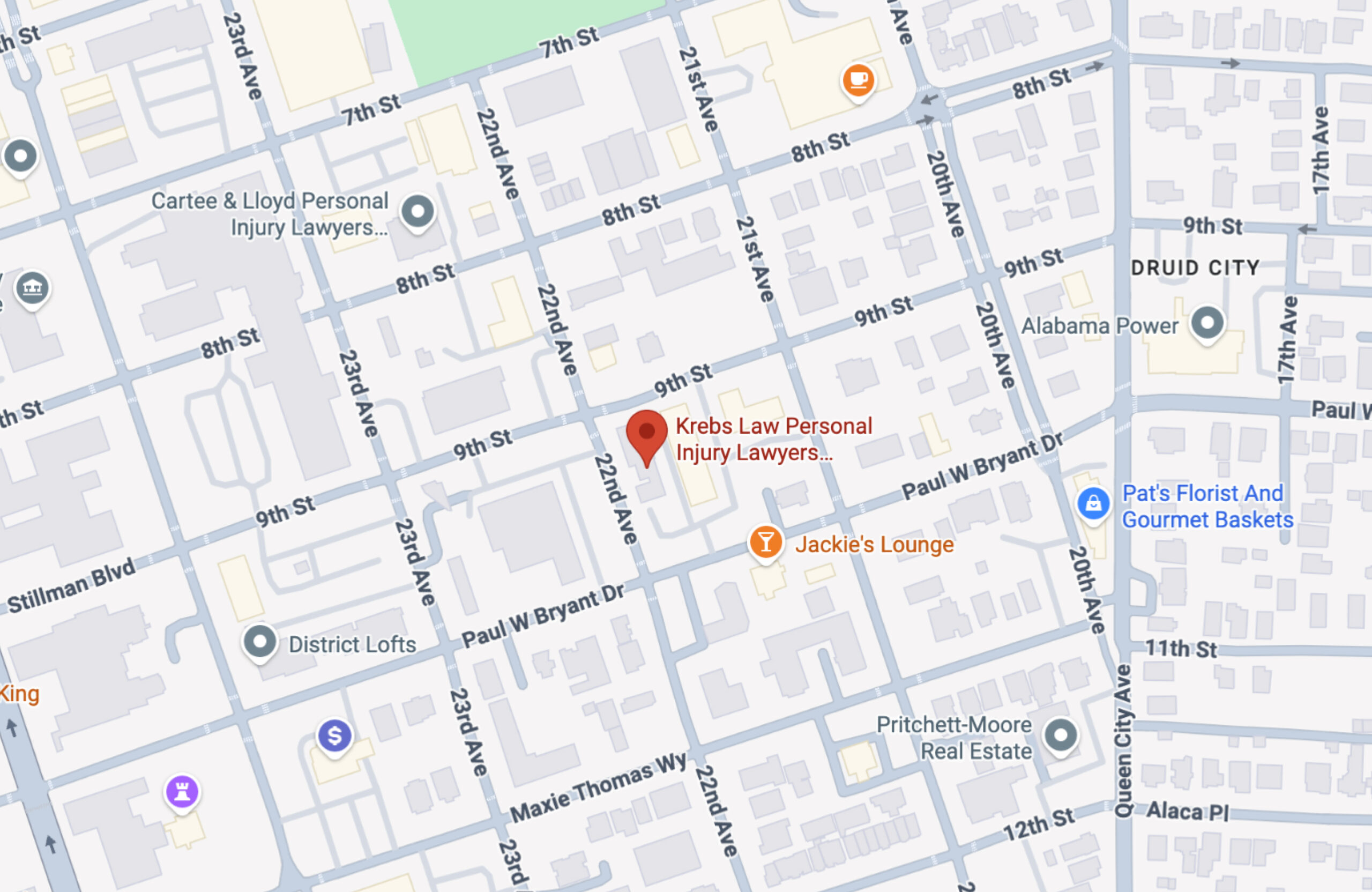
Yes. Our office is located in Tuscaloosa, and we represent injured people in Montgomery and throughout Alabama.
Alabama’s contributory negligence rule leaves very little margin for error in a brain injury claim. One admission to an adjuster can end a case that otherwise had real merit, and the 2-year filing deadline moves faster than most families expect as they manage treatment and rehabilitation.
Krebs Personal Injury Lawyers handles brain injury claims for people in Montgomery and across Alabama. We investigate how the injury happened, document its effect on work and daily life, and pursue the compensation available under Alabama law.
Talk with a Montgomery brain injury lawyer before you talk with the insurance company. Call Krebs Personal Injury Lawyers at 205-634-1000 or reach us through our contact page to schedule a free case evaluation.

J.R. is dedicated to providing personalized representation, avoiding a one-size-fits-all approach. He tailors his strategy to the unique challenges and needs of each client and case, ensuring focused and individualized attention.
His practice mainly covers Plaintiff’s Personal Injury, including car and 18-wheeler accidents, slips and falls, dog bites, defective products, and wrongful death. He also handles commercial disputes on contingency, with experience in contracts, construction, and probate. For any dispute headed toward litigation, J.R. develops an aggressive strategy to maximize your recovery through negotiation, arbitration, or trial.

"*" indicates required fields
"*" indicates required fields