This page was written, edited, reviewed & approved by JR Krebs following our comprehensive editorial guidelines. JR Krebs, the Founding Partner, has years of legal experience as a Personal Injury attorney. Our last modified date shows when this page was last reviewed.
Negotiation is the back-and-forth process of resolving your injury claim without a trial. An adjuster calls, offers a number, and asks you to decide before you know what your treatment will cost. That timing puts the pressure on the person holding the least information.
Alabama law shapes what that number can be, from the fault rules that decide whether you recover anything to the deadlines your insurer must meet. Krebs Personal Injury Lawyers handles these conversations for injured people across the state, so that an offer is measured against documented losses. You can ask our team to review an offer before you respond.
After a serious
Personal Injury

Negotiation, in its plainest sense, is a conversation between two sides who want different things and are searching for terms both can accept. In an injury claim, those sides are you and the insurance company for the party who caused your injuries.
The subject is compensation, and the currency is evidence. Our team assembles medical records, wage documentation, and proof of how the incident happened, then presents a demand that ties each dollar to something on paper. The adjuster reviews the package and responds with their own position.
One detail surprises most people: The adjuster across the table usually cannot approve any figure they want. Insurers set internal authority limits, and any request above that limit is escalated to a supervisor or a committee.
Knowing where those limits sit changes how a demand gets framed and when to hold a position. Most injury claims end this way rather than in a courtroom, and a negotiated resolution closes the claim permanently through a signed release.
Settlement negotiation follows a recognizable sequence, though the pace varies with the size and complexity of a claim. Understanding the order helps you see where an offer fits within the larger process rather than treating it as the final word.
The exchange generally moves through the following stages:
Each stage produces information that shapes the next one, which is why an early concession is difficult to undo later.
Some claims reach a point where direct exchanges no longer move. Mediation adds a neutral third person to the conversation, either because both sides agree to it or because a court orders it.
The mediator does not decide who is right and cannot impose terms on anyone. Under the state's civil court mediation rules, information disclosed during mediation is confidential and generally cannot be divulged afterward. That protection lets both sides test positions they would not risk stating in open court.
Mediation often works for a practical reason: It puts decision-makers with real authority in the same room on the same day.

No formula produces a settlement figure. The number reflects what the evidence supports, how clearly the fault lies with the other side, and what each side believes a jury might do with the same facts.
Damages fall into two broad categories, and each requires a different kind of proof.
Economic damages are the losses with a paper trail. These are the costs and lost earnings you can document through bills, records, and statements.
Several categories typically appear in a demand:
The stronger the documentation behind each line, the harder it becomes for an insurer to discount it.
Non-economic damages cover harm that no invoice measures. Pain and suffering fall here, along with the ways an injury reshapes daily life.
A demand generally addresses a few areas of this loss:
Because these losses resist arithmetic, they are the categories insurers question most often.
If an offer has already reached you and the figures behind it are unclear, our team can review the file and explain what your documentation supports. Call Krebs Personal Injury Lawyers at 205-634-1000 to talk it through.
Negotiation does not happen in a vacuum. The rules that would govern a trial set the boundaries of every settlement conversation, because both sides are pricing what would happen if the claim went that far.
This state is one of a few that still applies pure contributory negligence, a rule barring recovery by an injured person who shares any fault for the incident. In Golden v. McCurry, the state supreme court declined to adopt comparative negligence, leaving that change to the legislature. The plaintiff there stipulated he was 1% at fault and recovered nothing.
That rule sits underneath every negotiation. An adjuster who can build a plausible argument that you contributed to the incident has reason to hold firm, so we work early to document exactly how events unfolded.
Code of Alabama § 6-2-38 requires that actions for injury to the person be brought within two years. Once that period passes, the claim generally cannot be filed, and an insurer has little reason to improve an offer.
Time affects negotiation in subtler ways as well. Records grow harder to obtain, memories fade, and the evidence supporting a demand weakens the longer a claim sits.
Many people hesitate to discuss settlement at all, worried that naming a figure will be treated as an admission. The rules of evidence address that concern directly.
Under Rule of Evidence 408, offers to compromise and statements made during compromise negotiations are inadmissible to prove liability or the amount of a disputed claim. Narrow exceptions exist, including proof of a witness's bias or an effort to negate a contention of undue delay. That protection is what allows both sides to explore terms candidly.
Insurers operate under claim-handling regulations, and those deadlines give a stalled negotiation concrete milestones:
Delay alone is not always a violation, but a pattern of missed deadlines is worth documenting and raising during negotiation.
The figure stated in a settlement agreement is not always the figure you receive, as obligations attached to the recovery take precedence.
Hospitals hold a statutory claim against injury settlements. Under Alabama's hospital lien statute, a hospital has a lien for reasonable charges when the injured person is admitted within 1 week of the injury. That lien attaches to claims, judgments, and settlements, ranking behind an attorney's lien.
Health coverage can create its own repayment obligation. State law departs from the traditional collateral source rule, which generally bars a jury from considering outside payments. Under Alabama Code Section 12-21-45, evidence that medical expenses have been or will be paid or reimbursed is admissible, and proof that you are obligated to repay those amounts is admissible as well. Our team identifies these obligations before negotiating so a target figure accounts for net settlement recovery.
Injured people most often raise these questions once an offer is on the table.
You can, and some people do on minor claims. We suggest caution when injuries require ongoing treatment, because the value of future care is difficult to estimate without medical support.
It can. Under the contributory negligence rule, any fault assigned to you may bar recovery, which is why we document how an incident happened before an adjuster frames that question.
State regulations require acknowledgment of a first-party claim within 15 days and a decision to accept or deny within 30 days, unless the insurer explains why more investigation time is needed.
Generally, no. Rule of Evidence 408 makes compromise offers and statements made during negotiations inadmissible to prove liability or the amount of a disputed claim, with narrow exceptions.
The claim can move to mediation or to a filed lawsuit, and negotiation usually continues alongside both. Many claims resolve after litigation begins rather than at trial.
If the statutory requirements are met, yes. Our team identifies liens and repayment obligations early so you know what a settlement leaves once they are satisfied.
The contributory negligence rule gives an adjuster an argument that does not exist in most other states, and it surfaces during negotiation more often than people expect.
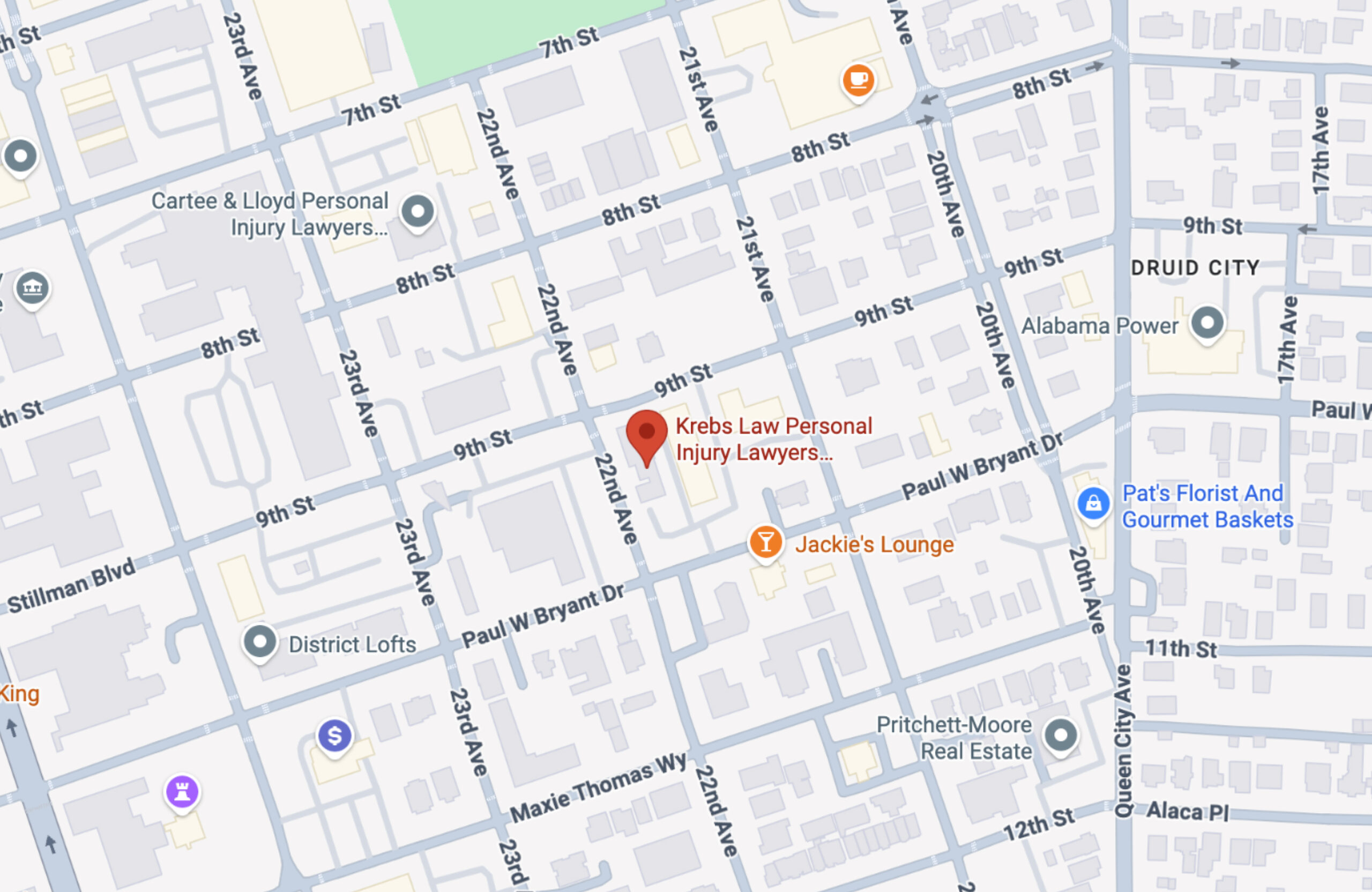
Our attorneys handle injury claims from a Tuscaloosa office and work with people throughout Alabama. We document how an incident happened, what the treatment costs were, and what recovery has meant for daily life, then bring that record to the negotiation instead of answering an offer with a number alone.
Injury claims are handled on a contingency fee basis, and our team explains those terms before you decide anything. A free case evaluation costs you nothing and gives you a clear read on what your documentation supports.
Call Krebs Personal Injury Lawyers at 205-634-1000 to talk through your settlement negotiation with our team.

J.R. is dedicated to providing personalized representation, avoiding a one-size-fits-all approach. He tailors his strategy to the unique challenges and needs of each client and case, ensuring focused and individualized attention.
His practice mainly covers Plaintiff’s Personal Injury, including car and 18-wheeler accidents, slips and falls, dog bites, defective products, and wrongful death. He also handles commercial disputes on contingency, with experience in contracts, construction, and probate. For any dispute headed toward litigation, J.R. develops an aggressive strategy to maximize your recovery through negotiation, arbitration, or trial.

"*" indicates required fields
"*" indicates required fields